Design Philosophy
We believe that true sustainability means consuming less.
That is why we aim to produce furniture and structures that last.
This means not only achieving a high standard of material and functional quality, but also allowing a personal relationship between the product and its user to develop from the beginning of the process.
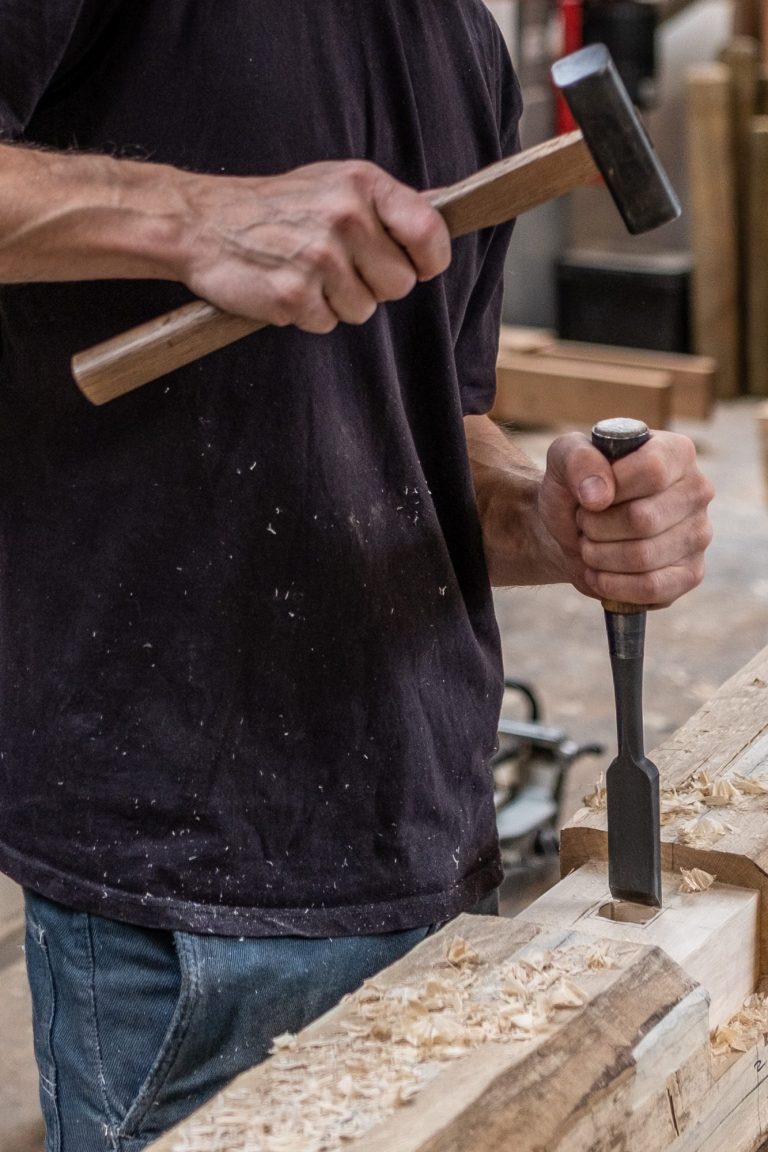
Working with a single material, the process is above all a transformation. Hewing, splitting, planing and cutting continually reveal new characteristics that need to be understood and addressed. This close relationship with the source material is not only necessary for making a lasting piece, but is also something we want to pass on to our clients. In this way, both the building and the design process become more of a conversation than a production.
Rather than adding to an existing supply of objects without a clear purpose, we prefer to make things in response to a specific need. This is why most of our work is made to order, developed together with the client and considered in relation to its use, surroundings and material. In this way, each piece has a reason to exist from the beginning.
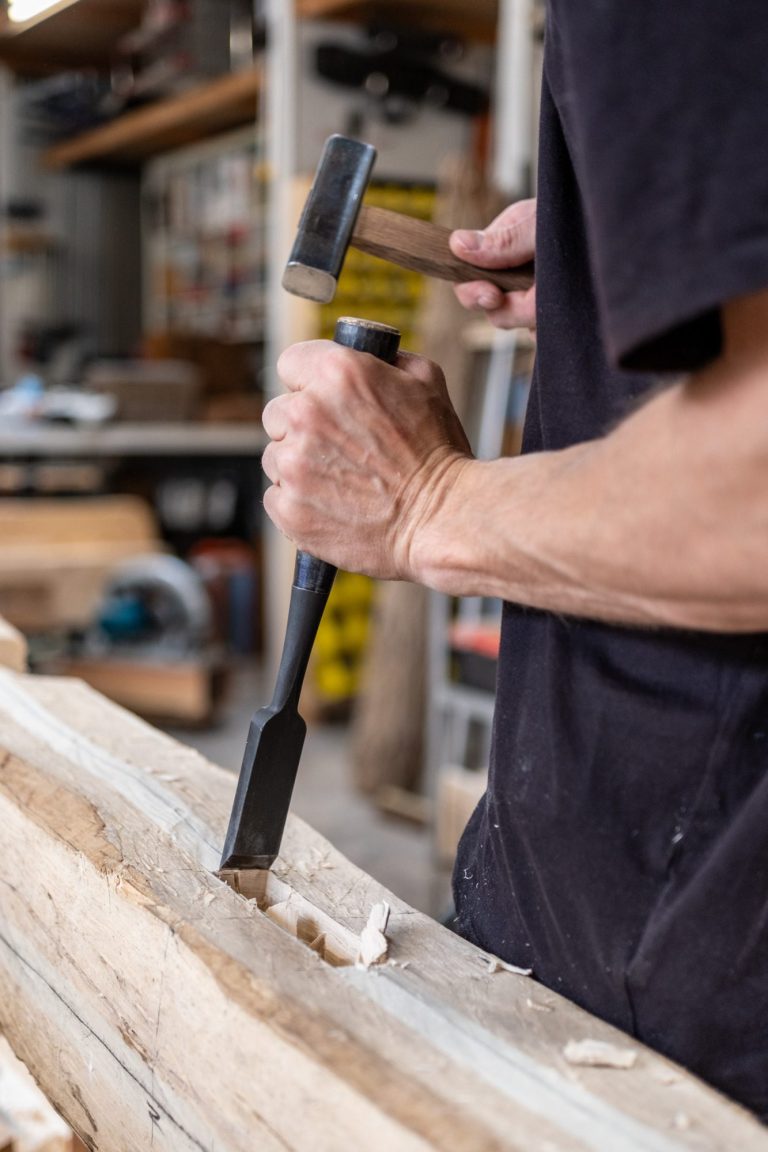
Materially, we work to a high standard of precision and use traditional wooden joinery. The joinery is kept visually simple and, wherever possible, assembled without glue. This allows the piece to be repaired relatively easily and, when necessary, taken apart, repaired, adapted or repurposed. Even if the design does not survive, the material retains its value.
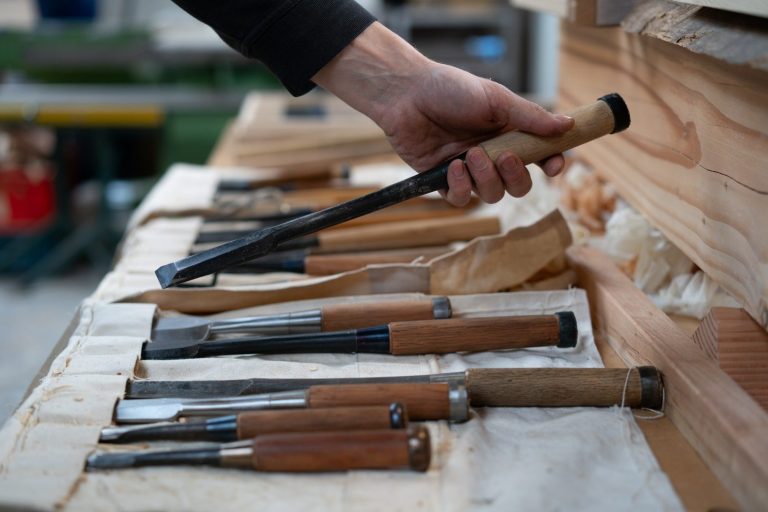
Many of our design choices are influenced by a longstanding fascination with traditional Japanese architecture and carpentry. The hand tools we use are made by Japanese blacksmiths using traditional methods, and reflect the care and beauty we aim to convey through our work.
However, through researching both Japanese and local traditions, we have found that the differences between them are just as interesting as the similarities. The universal use of wood is a fascinating subject that we will continue to study and incorporate into our work, in the hope of creating designs that remain relevant over time
Method
All projects begin with an individual enquiry and develop through a process of dialogue between client, material and design. Each project is considered on its own terms, with the design responding to the intended use, context and characteristics of the material.
Following the initial enquiry, a design is developed specifically for the project. This phase is quoted separately and may include design, drawing and development work.
Once the design has been approved, a separate quotation is made for its production and execution.
Throughout the process, decisions are made with the material and its possibilities in mind. Construction, joinery and finishing are developed as an integral part of the design rather than as separate technical considerations. Once the relevant quotation has been accepted, the work is carried out to the agreed design and specifications.
All our furniture and timber structures are individually designed and made to order, unless otherwise stated.
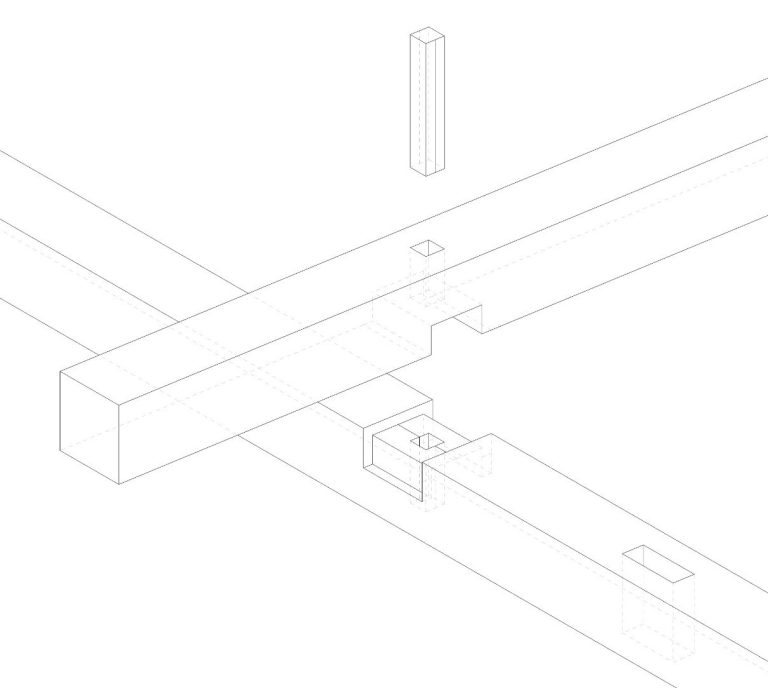
"Construction, joinery and finishing are developed as an integral part of the design rather than as separate technical considerations."
Bio
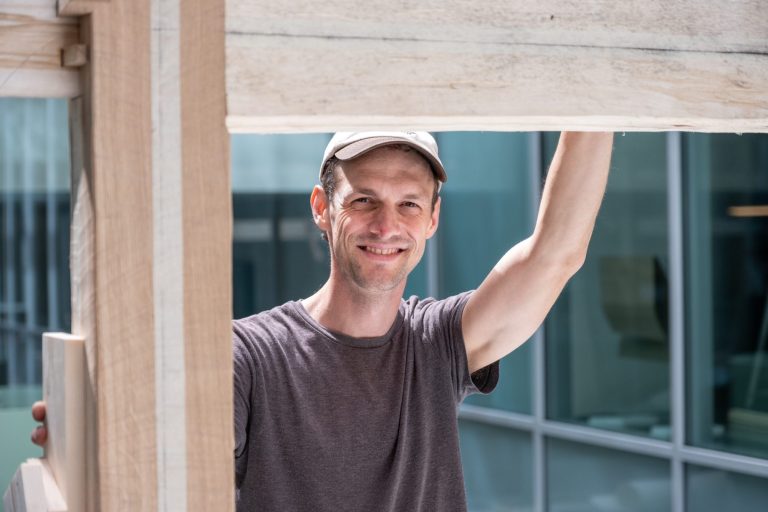
While working mainly as a woodworker today, my background is in fine arts. I graduated with a BFA in fine arts in Maastricht (NL) and later completed an MFA in Brussels (BE). During my studies, I became interested in modernist architecture and in making itself as a poetic subject. I was less concerned with the resulting image than the methods, choices and ethics behind them.
A turning point came when I encountered an exhibition of Ishimoto Yasuhiro’s work at the Bauhaus Archive in Berlin. I recognised in his photographs the modernist aesthetic that had existed, in a different form, hundreds of years earlier in traditional Japanese architecture. Looking further into this architecture led me to the beauty of its woodworking techniques and, in particular, its approach to structure and joinery.
At that time, I was working in exhibition building, where most things are made to be temporary. I found myself wanting to make things that could last, and became increasingly drawn to traditional Japanese architecture and carpentry. This eventually led me into furniture making, working alongside local furniture makers and interior builders until becoming fully independent in 2020.
Since then, I have been fortunate to work with clients who share my dedication to craftsmanship and environmental responsibility, allowing me to maintain and develop this practice.
I have made several study trips to Japan, where I have had the opportunity to meet and learn from craftspeople working within its living traditions. As a result, I was invited to take part in Kesurokai Sweden 2025, an international gathering of carpenters. This brought me closer to an interest that had been present from the beginning: architecture. Furniture making had, in a sense, been a way of working towards something larger. Since then, larger timber structures have increasingly become part of my practice.
Alongside my work, I maintain an ongoing study of traditional Japanese architecture, as well as the more universal aspects of architecture and working with wood. I am interested in what different cultures and periods have in common: the fundamental needs of shelter, the possibilities of a material, and the question of what remains meaningful over time.
At the centre of this research is a simple question: what does it mean to make a place for human life?